
Heating System Inspection Before Winter: A Building Manager’s Checklist for Altoona

If you are responsible for a building in Altoona, Hollidaysburg or anywhere else in Blair County, getting the heat ready for winter comes down to two lists. There is what your own staff can safely check, which is filters, returns, registers, thermostat schedules and a slow walk past every piece of equipment with your eyes open. Then there is what a licensed technician has to open, which is combustion, venting, controls and the boiler itself. The first list does not replace the second, and neither one goes well in January.
This is written for the person who holds the keys to the mechanical room: a property manager, a facilities lead, a building owner, a church trustee, a shop foreman who also happens to own the building. It covers what a pre-season walk-through catches, where the line sits between maintenance and licensed work, and what makes an aging system a replacement conversation instead of another repair.
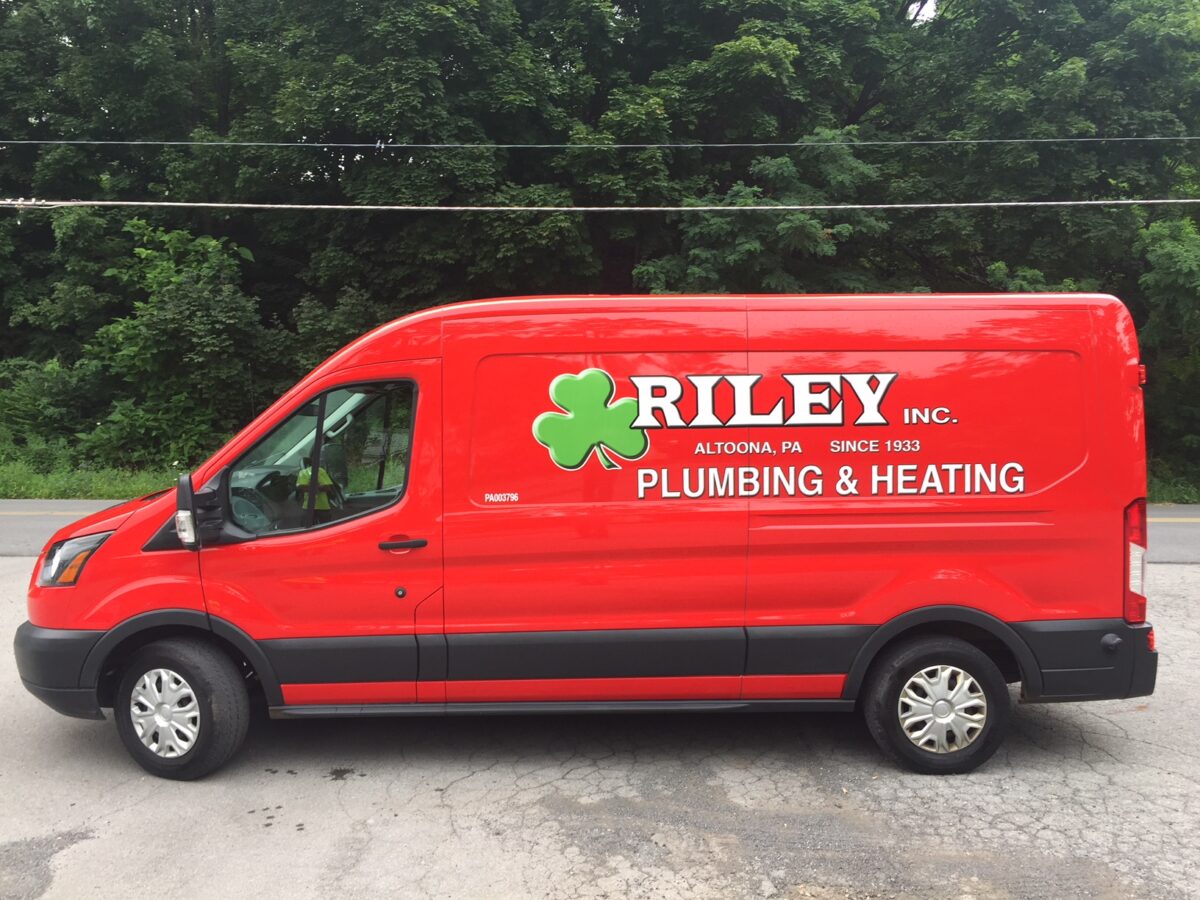
Riley, Inc. has done heating work in Altoona since 1933, for residential, commercial and industrial customers. Our heating and cooling services cover inspections, venting, and repair and replacement of all makes and models, across hydronic, radiant, steam and hot air systems.
The short answer
Before the heating season, have building staff handle filters, blocked returns and registers, thermostat schedules, and a look at every flue termination outside. Have a licensed technician handle combustion, draft and venting, safety controls, and the boiler inspection. Book that visit in September or October.
The reason for the calendar is simple. A worn part found in October is a scheduled replacement. The same part found in January is a building with no heat, at the busiest week of the year.
What your own staff can check in one afternoon
None of the following requires opening a burner compartment or touching a gas line. It is a walk-through, a flashlight and a notepad, and it catches a large share of the calls that come in on the first cold night.
- Filters, with the size written down. Pull each one, hold it up to a light, and write the size and the date on the frame of the new one. A building with four air handlers usually has three different filter sizes and no record of any of them. Keep a spare set on the shelf.
- Returns and supply registers that are blocked. Over a summer, pallets get stacked against a return grille, a filing cabinet lands in front of a register, and a tenant hangs plastic sheeting over a warehouse unit heater. Starved airflow shows up as a system that short cycles or trips on a limit.
- Thermostat schedules and any dead batteries. Check that every thermostat is back on a heating schedule rather than a summer program, that setbacks match the hours the space is actually occupied, and that a holiday schedule from last year is not still running the building.
- Water, rust or staining at the base of a boiler. A small weep under a boiler, a valve or a circulator is information. Photograph it, note the date, and mention it when you book.
- Flue terminations, from outside. Walk the exterior and look at every vent that comes out of the wall or the roof. Clear the shrubs that grew over a sidewall vent this summer, and note where snow piles up against that wall so somebody remembers to keep it clear in February.
- Carbon monoxide alarms. Test them, note the manufacture date on the back, and replace the ones that are past the end of their listed life.
- Labels. Mark the gas shutoff, the electrical disconnect for each unit, the boiler feed valve and the zone each thermostat controls. It costs an hour now and saves a great deal of time when something goes wrong on a Sunday.
What only a licensed technician should open
The rest of a pre-season inspection is licensed work, for one reason: every item on the list below is either a combustion system, a pressure vessel or a safety control, and each of them fails in a way that hurts people rather than just making the building cold.
- Combustion and draft. Burner condition, flame, gas pressure, the heat exchanger, and whether the appliance is actually drafting the way it was designed to.
- Venting. Joints, slope, support and clearances at the termination, plus the condition of the connector where a boiler and a water heater share a common flue. Venting work, on vents and on ductwork, is part of what our technicians do.
- Safety controls. Limits, the aquastat, the low water cutoff on a steam boiler, pressure controls and the relief valve. A control that has never been tested is not a control.
- The boiler and its near piping. Water level and feed, the expansion tank, the sight glass on steam, and whether the near-boiler piping is still doing its job after a previous repair.
- Distribution. Circulators, zone valves, main venting on steam, and the zones that were reported cold last winter and never chased down.
If one zone or one room went cold last year and nobody ever found out why, that is worth solving now rather than in the first hard week. Our guide to a radiator that will not heat up while the rest of the building is warm covers the usual causes. If the system did not start at all, start instead with a furnace or boiler that will not turn on.
Riley, Inc., Altoona, PA
Who shows up for the inspection
The team behind a pre-season heating visit in Blair County.
1933
Doing plumbing and heating in Altoona since this year, now in a fourth generation
250+
Years of combined experience across the team
13
Master, journeyman and apprentice plumbers on staff
9
Service vans working Altoona, Hollidaysburg and Blair County
1968
A member of the Associated Builders and Contractors, Inc. since March of this year
PA003796
Pennsylvania registration number. Technicians hold safety training certification
Venting is a safety item, not a comfort item
The single strongest argument for a pre-season inspection is not the heating bill. It is that a heating appliance which burns fuel has to get its exhaust out of the building, reliably, every cycle, all winter.
Carbon monoxide has no color and no smell. More than 200 people in the United States die every year from accidental non-fire carbon monoxide poisoning associated with consumer products, according to the U.S. Consumer Product Safety Commission. The CPSC also notes that more than 100 of those deaths are linked to portable generators, which matters for any building that plans to run one during an outage. A generator belongs outside, well away from doors, windows and vents, never in a basement, a loading bay or an attached garage.
In a building, the things that put exhaust where it does not belong are ordinary and boring: a disconnected or rusted vent connector, a bird nest or a wasp nest in a chimney, a sidewall termination buried by a snow drift, a common flue that is now badly oversized because a high-efficiency water heater was swapped in and the boiler was left on the old chimney alone. None of those announces itself. A technician finds them by looking.
Book the visit in September or October, not in January
The calendar does real work here, and it is worth being blunt about why.
- A problem found early is a scheduled job. In October you can pick the day, work around tenant hours, and have the part ordered before the cold arrives. In January the same finding is an outage.
- Parts take time. Controls, circulators, zone valves and sections for older equipment are not all on a shelf in Altoona. Ordering in the fall is a different experience from ordering in a cold snap.
- You can test under real conditions without risk. Running a system hard on a mild October day tells you what it will do in February, and if something fails during the test, the building is still comfortable while it gets fixed.
- It lands in a budget cycle you control. A replacement discussed in the fall can be planned and quoted. The same replacement in mid-winter is decided under pressure.
Riley’s office is open Monday to Friday, 8:00 AM to 4:30 PM. If you are putting a maintenance plan together for a building or a portfolio, that is the window to call and get on the schedule.
When another repair is the wrong answer
There is a point where a heating system stops being something to fix and starts being something to replace, and it is usually visible before it becomes urgent.
The signs are practical. The same component has been repaired more than once in recent seasons. Parts for the unit are getting hard to source. The equipment was sized for a building that has since been divided, extended or half of it left unheated, so it short cycles in one area and never satisfies in another. Or the heat exchanger, the sections or the vent system have reached a condition a technician will not sign off on.
Our technicians handle both sides of that conversation: repair and maintenance of all makes and models, and replacement of outdated systems, with personalized recommendations based on the space. We have factory-trained technicians for the service and installation of high-efficiency boilers and water heaters. If part of the building’s problem is hot water rather than heat, our water heater installation, replacement and repair page covers that side.
What to have ready when you call
A pre-season booking moves faster when you can answer these on the first call.
- The make, model and serial number from the data plate on each unit, and the fuel it burns.
- How many separate systems and zones the building has, and what each one serves.
- What went wrong last winter, what was done about it, and by whom.
- Access details: where the mechanical room is, who holds the key, whether there is a roof hatch, and the hours tenants or staff are on site.
- Anything already noticed on your own walk-through, including the photographs.
Common questions about pre-winter heating inspections
How often should a commercial heating system be inspected?
At minimum, once before each heating season, and then as often as the equipment manufacturer’s instructions call for. A building with several systems, a steam boiler or equipment past its first decade earns more attention than a single newer unit.
Can our own maintenance staff do any of it?
Yes, and they should. Filters, blocked returns and registers, thermostat schedules, exterior vent clearances, alarm tests and labeling are all in-house work. The line falls at anything involving combustion, gas, venting, safety controls or a pressure vessel.
Do you only service systems you installed?
No. Our technicians repair and maintain all makes and models, across hydronic, radiant, steam and hot air systems, furnaces, boilers and heat pumps.
Do you work on residential properties as well as commercial buildings?
Yes. Riley, Inc. serves residential, commercial and industrial customers in Altoona and the surrounding area.
What if the heat goes out after the office closes?
Send the details through the request a quote form, including the building address, the equipment and what it is doing. It will be waiting when the office opens at 8:00 AM.
Getting on the schedule
Riley, Inc. is at 2701 Washington Ave, Altoona, PA 16601. The phone is (814) 942-6772 and the office is open Monday to Friday, 8:00 AM to 4:30 PM. The company is family owned and operated, started in 1933 by Charles D. Riley, and is now run by his grandson with two great grandsons in service. The full history is on our About page.
To book a heating inspection for a building in Altoona, Hollidaysburg or elsewhere in Blair County, call (814) 942-6772 or request a quote. Do it while the weather still lets you choose the date.