
Why One Radiator Is Not Heating Up in Altoona When the Rest of the House Is Warm

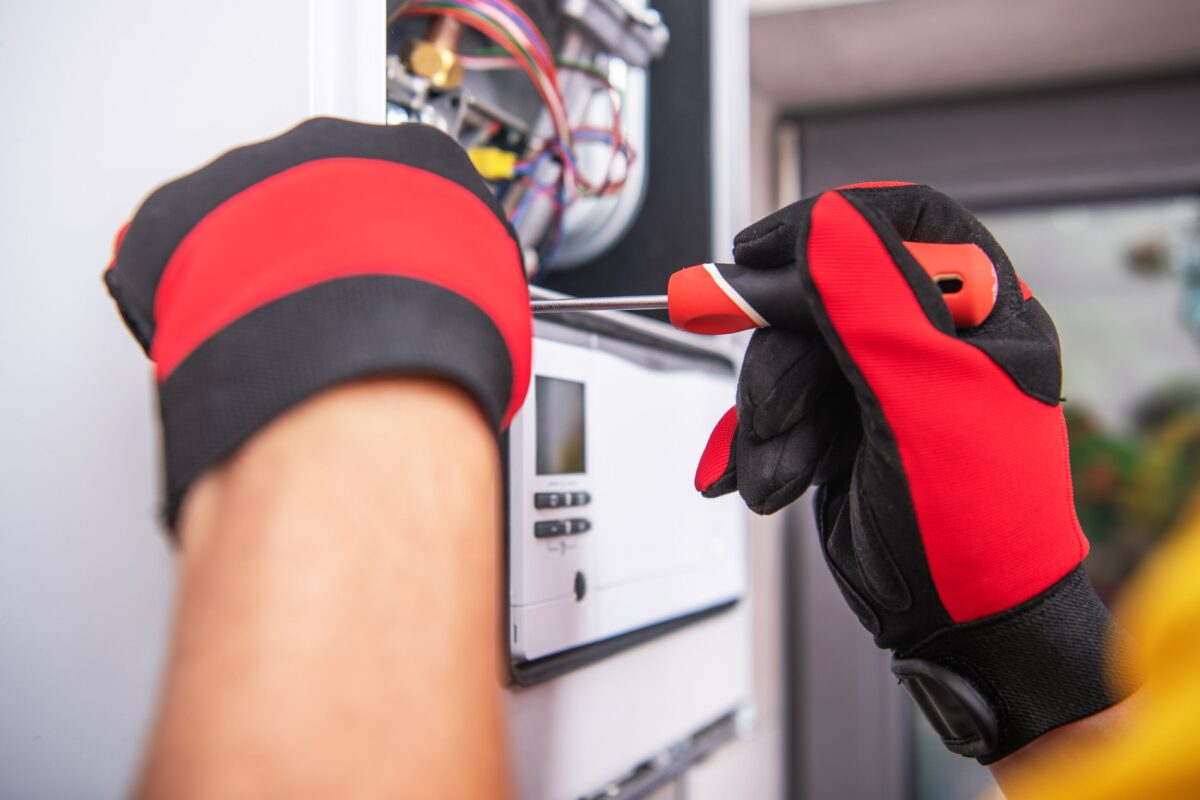
The boiler is running. The kitchen is warm, the living room is warm, and the radiator in the back bedroom is cold to the hand. One radiator not heating up while the rest of the house heats is a different problem from a heating system that will not start, and it usually has a small cause.
On a hot water system it is almost always air trapped at the top of that radiator, or a valve that is not as open as it looks. On a steam system it is almost always the air vent or the way the radiator sits on the floor. Each of those has a homeowner version and a technician version. Knowing which system you own decides which list you are allowed to work from, because the wrong move on a live steam radiator will burn you.
Riley, Inc. has done heating work in Altoona since 1933. Our technicians service hydronic, radiant, steam and hot air systems, and repair and maintain all makes and models, so the checks below cover both kinds of radiator.
The short answer
Feel the radiator in two places. Cold at the top, warm at the bottom on a hot water system means air, and bleeding it is a normal homeowner job. Cold all over, with the supply pipe cold too, means nothing is reaching it, which points at a valve, a zone or a circulator. Warm at the top, cold along the bottom means the flow is passing through but the base is packed with sludge.
On a steam radiator, none of the above. A cold one is the air vent or the pitch, and you do not open anything while the system is live.
Work out whether you have steam or hot water before you touch anything
Look at the pipe or pipes coming out of the bottom of the radiator, then look for the small fitting near the top.
One pipe entering at the floor, with a bulbous metal vent sticking out of the side of the radiator partway up, is one-pipe steam. You will hear that vent hiss when the boiler fires. Two pipes, with a small valve at the top of one end that takes a square key or a flat screwdriver, is hot water. Two-pipe steam exists in older buildings around Altoona too, and there the giveaway is still the fitting: steam radiators carry an air vent that hisses or a steam trap at the return, hot water radiators carry a bleed valve you can open with a key.
If you are not sure after that, stop and ask. The two systems fail differently and the safe actions are not the same.
Riley, Inc. — Altoona, PA
Telling a hot water radiator from a steam radiator
Six things you can check standing in front of it, before anyone opens a tool bag.
| What you look at | Hot water | Steam |
|---|---|---|
| Pipes at the floor | Two, a supply and a return | One on a one-pipe system, two on a two-pipe system |
| The small fitting | A bleed valve at the top, opened with a key or a screwdriver | A bulbous air vent on the side that hisses as the system heats |
| What is inside it | Water, under pressure, all year | Air most of the time, steam when the boiler fires |
| Surface heat | Hot to the hand, near the water temperature the boiler sends | Hot enough to burn on contact. Steam condenses near 212°F |
| Letting the air out | Bleeding, a normal homeowner job | Never open a vent or a fitting on a live steam radiator |
| The supply valve | Can be throttled to balance a room | On one-pipe steam, fully open or fully closed, never in between |
Sources: Riley, Inc. HVAC page; HeatingHelp, Water Hammer in Steam Heating Systems, on one-pipe steam valve position. Compiled 28 September 2026.
On a hot water radiator, air is the first thing to rule out
Water carries the heat, and air does not. When air collects in the top of a radiator it sits there and the water flows underneath it, so the bottom of the radiator warms and the top stays cold. That is why the two-handed check tells you so much.
Every hot water radiator is built with somewhere for that air to leave. As HeatingHelp puts it, each hot water radiator should have an air vent at the top, on the side opposite the inlet pipe, and that is the fitting you use to bleed it.
- Run the heat first. Let the system come up so the other radiators are hot. You want the cold one to be genuinely cold, not just waiting its turn.
- Put a cup and a rag under the valve. What comes out at the end is hot, dirty water, and it stains carpet.
- Open the valve about a quarter turn. Use the radiator key or a flat screwdriver, whichever the valve takes. You should hear air hiss.
- Close it as soon as water runs steadily. A thin, spitting stream still has air behind it. A solid stream means the air is out.
- Then look at the boiler pressure gauge. Bleeding takes water out of a sealed loop, so the pressure drops. Most systems have an automatic feed valve that tops it back up. If the gauge sits low and stays low, the loop is not refilling, and that is a technician’s job rather than a second attempt.
Give it thirty minutes. If the radiator comes up to temperature, you are done. If it does not, the air was not the problem.
There is a second signal worth catching here. A hot water loop is sealed, so it should not keep making air. If you are bleeding the same radiator every few weeks, something is feeding air into the system: a small leak drawing in, a waterlogged expansion tank, or fresh water being added repeatedly. Bleeding treats the symptom. The cause is in the boiler room.
A valve that looks open is not always open
If the supply pipe running into the radiator is cold as well, air is not your answer. Nothing is getting there.
Work back along the pipe. On a two-pipe hot water system there is usually a valve at each end of the radiator: a supply valve you adjust, and a return or lockshield valve that was set once when the system was balanced. Both get moved. A radiator shut off for a summer painting job and never reopened is a common find, and so is a thermostatic head with a pin seized under it after five months of sitting. Tapping a stuck pin gently while the head is off will sometimes free it, and sometimes it means the valve body is finished.
One more pattern: warm across the top, cold along the bottom edge. That radiator is passing water but its lower channels are packed with sludge and rust from the loop. It needs flushing rather than bleeding, and on an old cast iron system that conversation is usually about the water quality in the whole loop, not one radiator.
On a steam radiator, look at the air vent and the pitch
A one-pipe steam radiator fills with steam only if the air already inside it can get out first. The air vent does that work. When the vent clogs with rust, gets painted over during decorating, or fails shut with age, the air stays put and the steam never gets in. That radiator stays stone cold while every other one in the house heats.
A failed vent is an inexpensive part, but it is chosen to match the radiator and the position in the system. As HeatingHelp notes, quick vents let the air race out of a radiator, and they also let the steam race in, which brings its own trouble. Fitting the fastest vent on the shelf to a cold radiator is how a cold radiator becomes a banging radiator.
The second thing to look at is how the radiator sits. A one-pipe steam radiator has to pitch back toward its supply valve so the condensate can flow out of the radiator. When a floor has settled, or a leg has been shimmed by someone moving furniture, water lies in the bottom of the radiator instead of draining. You get banging, a spitting vent, and uneven heat.
The third is the valve itself, and this one gets people. On one-pipe steam the radiator valve is a service valve. HeatingHelp is direct about it: it has to be either fully opened or fully closed, and throttling the valve causes water hammer problems. If someone has turned a one-pipe steam valve halfway down to quiet a hot room, open it fully and deal with the temperature a different way.
Do not bleed a steam radiator
There is no bleed valve on a steam radiator, and the vent on the side is not one. Unscrewing a vent or loosening a union while the boiler can fire releases steam at scalding temperature into the room. Replacing a steam air vent, correcting pitch and adjusting a steam valve are done with the system cold and the boiler locked out. If you smell gas near the boiler, or a carbon monoxide alarm is sounding, leave the building first, then call 911 and your gas utility from outside.
When it is a whole zone rather than one radiator
Count the cold radiators before you decide what you are dealing with. One cold radiator is a radiator problem. A cold upstairs, a cold wing of a building, or every radiator on one loop is a distribution problem, and the parts involved are not homeowner parts.
- A circulator that is not turning. The pump moves water through that loop. A seized circulator or a failed relay leaves the boiler hot and the zone cold.
- A zone valve that is not opening. Multi-zone houses use a motorized valve per loop. When the motor or the end switch fails, the thermostat calls and nothing answers.
- An air-bound riser. Air collected at the high point of a loop stops flow to everything past it, and it will not clear by bleeding one radiator at the end of the run.
- A control or aquastat fault. The boiler may be satisfying itself on its own limit and never sending heat out.
- On steam, main venting. If the air cannot leave the main quickly, the far end of the system gets steam late or not at all, and the radiators there read as cold.
If the boiler itself is not firing at all, that is a different starting point, and the checks in our guide to a furnace or boiler that will not turn on are the ones to run first.
Stop and call a licensed technician if you see any of this
- Water on the floor under a radiator, at a valve, or around the boiler.
- A steam radiator that bangs hard when the system fires, or a vent that spits water.
- A boiler pressure gauge that keeps climbing, or a relief valve discharging.
- A pressure gauge that will not hold after bleeding, or a loop you have to refill by hand.
- A bleed valve that will not close, or one that snaps, seizes or weeps.
- Rust, soot or scorch marks around the boiler flue, or any smell of combustion in the room.
- A whole zone cold with the boiler hot.
Who you are calling in Altoona
Riley, Inc. is a family-owned and operated plumbing and HVAC company, started in 1933 by Charles D. Riley during the Great Depression, doing plumbing and heating for Altoona customers. Three of his sons carried it on. A grandson is president today, with two great grandsons in service, which makes four generations in the same trade. The team has more than 250 years of combined experience, runs nine service vans, and works for residential, commercial and industrial customers across Blair County and the surrounding area. The history is on our About page.
Every technician holds safety training certification, Riley has been a member of the Associated Builders and Contractors, Inc. since March 1968, and the Pennsylvania registration number is PA003796. Our heating and cooling page covers repair and replacement of all makes and models, hydronic, radiant, steam and hot air systems, boilers, furnaces, heat pumps and radiant heating, inspections, and venting work on vents and ductwork. The team includes factory-trained technicians for high-efficiency boilers.
What to have ready when you call
A cold-radiator call goes faster when you can answer five things.
- Whether the radiator is steam or hot water, and what told you so.
- How many radiators are cold, and where they are in the building.
- Where the cold radiator is cold: the top, the bottom, or all over.
- What the boiler pressure gauge reads, if the system has one.
- Which checks above you already made, and what happened.
Riley, Inc. is at 2701 Washington Ave, Altoona, PA 16601, right off 18th Street. The phone is (814) 942-6772 and the office is open Monday to Friday, 8:00 AM to 4:30 PM. Outside those hours, send the details through the request a quote form and they will be waiting when the office opens.
Booking the heating inspection in October rather than January is the cheaper version of this conversation. If you manage a building rather than a house, our checklist for a heating system inspection before winter covers the same job at building scale. If one radiator is still cold after the checks above, call (814) 942-6772 or request a quote.